Seeds of Rebirth. A future for families in Afghanistan’s eastern provinces
Seeds of Rebirth provided concrete support to the families in the provinces of Kunar, Nangarhar, and Laghman, Afghan regions hit hard by the food crisis, the aftermath of the August 2025 earthquake, and broader economic and social upheaval.
Families were selected from among those most exposed to risk, with particular attention given to households lacking stable income, led by women, including people with disabilities, and living in highly isolated rural areas.
The project was carried out in collaboration with local communities. In a context marked by instability, logistical challenges, earthquake damage, and armed conflict, it provided concrete tools to strengthen food security and build lasting economic self-sufficiency, directly or indirectly helping more than 6,700 people living in poverty.
Small-scale livestock farming
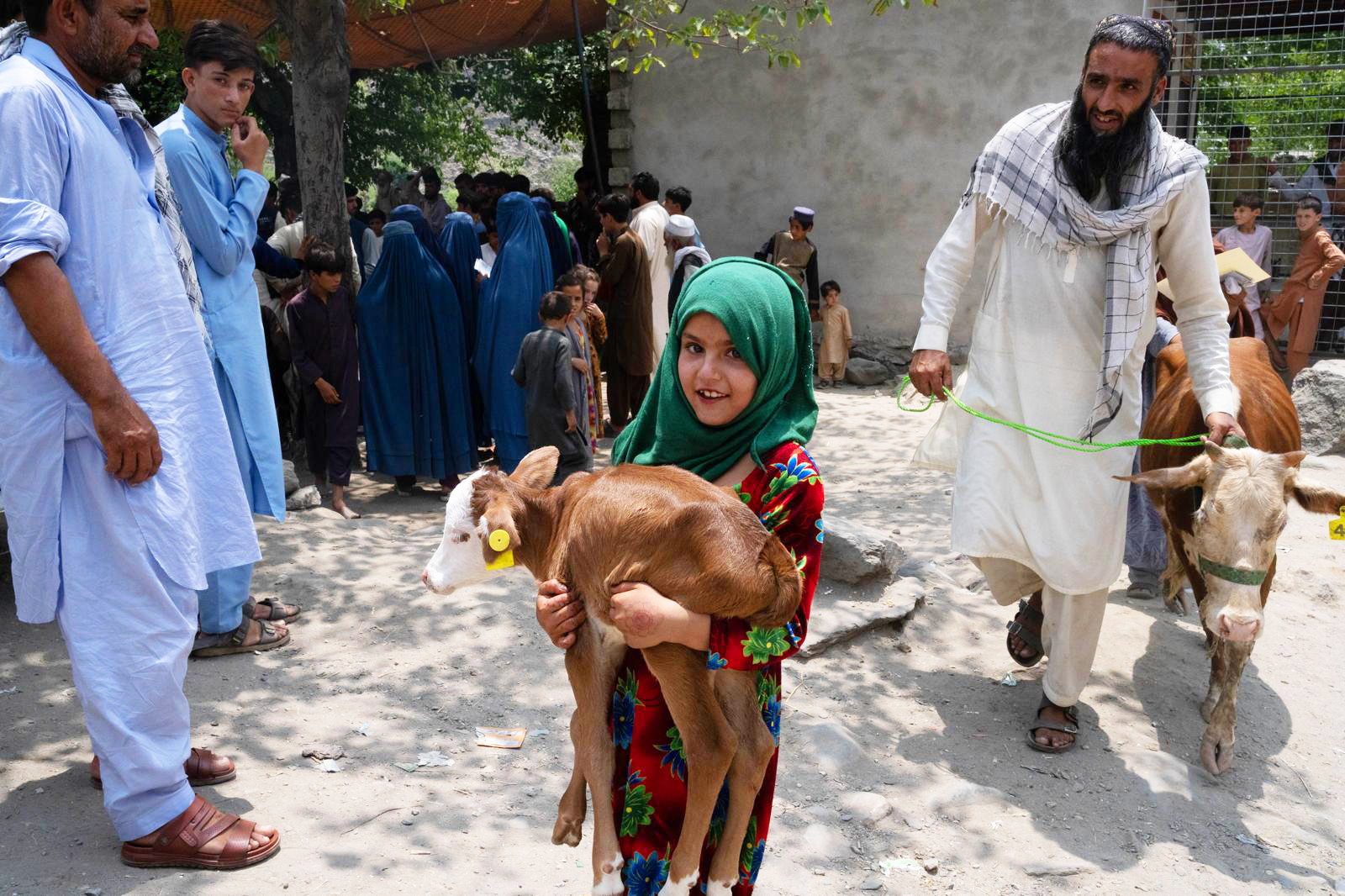
The first component of Seeds of Rebirth focused on cattle and goat farming. In total, 785 families—4,710 people—were supported across the provinces of Kunar, Laghman, and Nangarhar, through:
-
Free distribution of 530 cows and 510 goats.
-
-
Veterinary care (vaccinations, insemination, treatment).
-
Provision of tools and equipment.
-
-
Training in livestock health management practices, breeding techniques, and sustainable farming methods.
This intervention helped improve household nutrition while also creating income opportunities—through the sale of milk and dairy products, calves, and baby goats—for families lacking sufficient means of subsistence.
Income-generating activities in the agri-food sector
The second component of the project, implemented in Nangarhar and Laghman, focused on establishing small income-generating activities in the agri-food sector, providing:
-
Equipment and materials for food processing.
-
Training in food processing, preservation, and packaging. The training involved 350 women heads of household, on whom more than 2,000 people are economically dependent. Each participant gained practical skills (such as drying and storage techniques, and the production of chutneys and pickles), fundamental hygiene knowledge, and the competencies needed to start and manage family-run microenterprises.
In one of the most complex humanitarian contexts in the world, where economic opportunities are extremely limited – especially for women—Seeds of Rebirth has opened up real paths toward independence and resilience for more than 1,100 Afghan families, the majority of them female-headed.