Work as Resistance. The Story of Shehzadgi.
Violence does not always leave visible marks. Sometimes it takes the form of silence, dependence, or the inability to choose. It is the first form of violence: economic violence, which traps women when they are deprived of the means to support themselves, to study, and to work. In Afghanistan, where social and political rules still confine women to the margins of society, this form of violence is as widespread as it is invisible. Yet even under the harshest restrictions, there are women who resist.
Among them is Shehzadgi, 35, founder and director of the Hasanat Jewelry and Afghan Clothing Center in Mehtarlam, in the heart of Laghman province in eastern Afghanistan. Her artisan workshop is now a symbol of rebirth and independence: a place where around twenty women learn to create jewelry and traditional garments, but above all to reclaim their freedom.
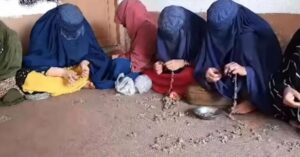
“Every woman who comes in here carries with her a story of pain or fear,” Shehzadgi says. “I want her to leave with a story of courage. Work is our form of freedom, our response to violence.” With her social enterprise model, Shehzadgi was among the candidates for NOVE’s Women Business Prize, an award that celebrates women entrepreneurs committed to building social impact and resilient communities. Her candidacy stems from a simple yet revolutionary idea: placing women’s training and empowerment in a context where education is denied.
Even before the Taliban’s return, it was difficult for a woman to work, especially in the more conservative villages. But I wanted to change the rules, so I created a space where women can learn a skill, earn an income, and believe in themselves again.
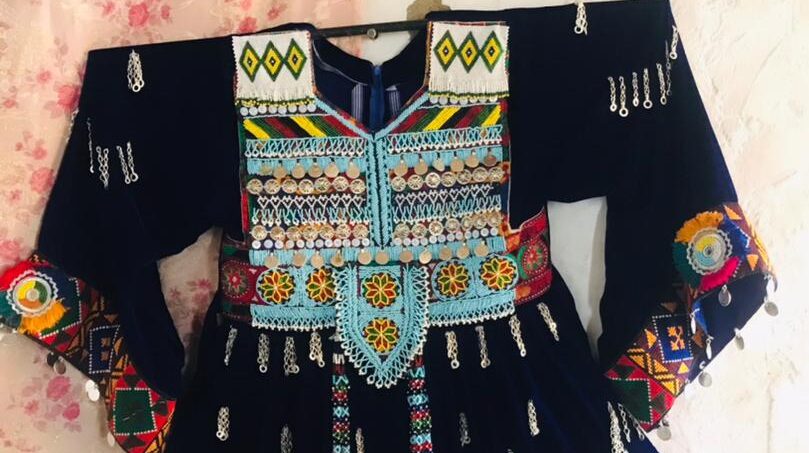
In the workshop, the women create earrings, necklaces, and embroidered garments. Each object is a fragment of resistance, a message of identity. “Every creation is a way of telling the world that we are still here. That, despite everything, we continue to create beauty. We teach a skill, but also how to believe in one’s own worth. It is a silent revolution, but a real one,” Shehzadgi tells us. Many of her trainees have now opened small workshops of their own or sell their products in local markets, breaking the cycle of economic dependence.
When a woman earns her own money, no one can silence her anymore.
This is my form of resistance.
Not with weapons, but with work.
Every morning, Shehzadgi opens the doors of her center, prepares the materials, welcomes her trainees, and makes sure no one is left behind. “I don’t want to be called a heroine,” she says. “I just want every woman to have free hands. Because as long as we work, as long as we learn, no one can take away our dignity.”
Hers is a form of peaceful resistance against the most insidious form of violence: economic violence. With needle, thread, and determination, Shehzadgi shows that even in places where everything seems lost, women can begin again and stitch, with their own hands, the hope of a different future.