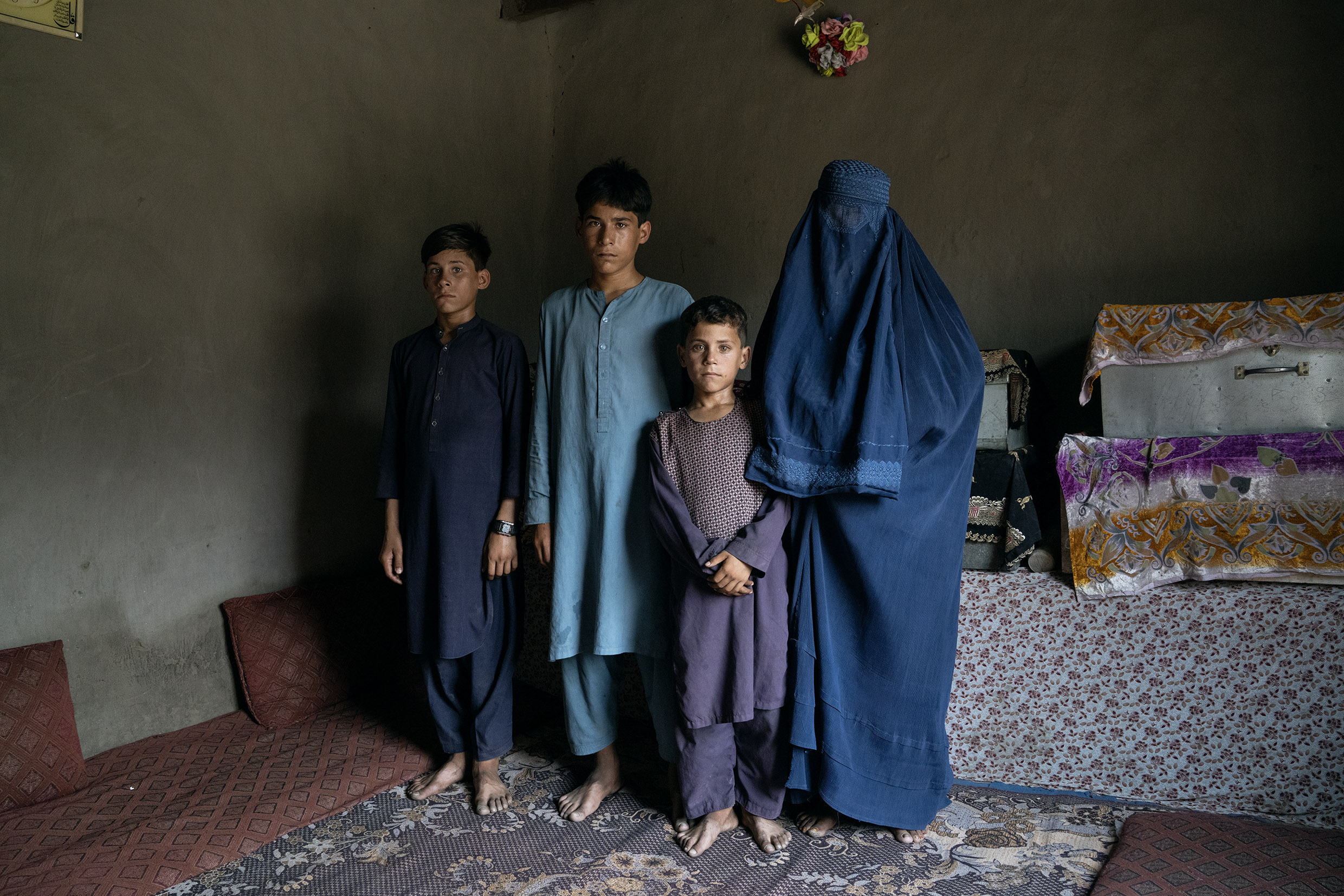
The photo is published for illustrative purposes only
The rebirth of a mother. Nazanin’s story
Nazanin is 37 years old, comes from the province of Kabul, and is illiterate. Two years ago, she became a widow: her husband died of electrocution while working. But the real burden, the one that had been carving into her for years, didn’t begin on that day. It began long before.
Today, Nazanin lives with her six children: a 16-year-old son, who has never attended school, and five daughters. Life has never been easy for her, as she has faced years of emotional, physical, and economic hardship.
Her marriage was not a love story, but a long shadow. Her husband, trapped in his drug addiction, had turned their home into a place of fear.
“I spent many years with him, but those years were full of bitter and painful experiences instead of joy.”
For many years, Nazanin’s house was not a home. It was a suspended place, where any sound could become a storm, and each day she moved silently, like someone walking on ground that could collapse beneath her feet.
The abuse was daily, often sudden, like shocks travelling through the walls. Sometimes it took only a small noise, a wrong gesture, or a glass placed in the wrong way to unleash his violence.
“He beat me all the time and made my life hell”
she recounts.
“There wasn’t a single day when I felt safe.”
But what hurt her more than the blows were the words. Words that belittled her, that made her feel guilty for something she had never chosen and never done.
“His words broke me more than the beatings”
she says, with unwavering clarity.
“I completely lost confidence in myself.”
Over time, Nazanin stopped speaking. She shrank. She lost her friends, she lost her confidence, she even lost the right to tell her own story.
“I felt that if I had told anyone about his addiction, I would have been judged and humiliated”
she recalls.
So she remained alone inside a pain that had no name.
When her husband died, Nazanin’s body stopped taking blows, but her mind did not. The trauma sat beside her. It followed her through sleepless nights, through the fear triggered by the smallest sound, and through the struggle of looking at her children and seeing her own wounds reflected in them.
Nazanin’s healing journey began when she met the psychologist from the Dignity project. During the first session, Nazanin trembled. Her voice came out thin, as if she needed permission to exist. She spoke of constant anxiety, sleepless nights, and loss of appetite. In that room, for the first time in years, she met someone who truly listened.
From that moment, something began to change.
“It was the first time someone really understood my pain.”
Nazanin began to open up, to regain trust.
She learned to breathe differently, to slow her heartbeat when fear rose to her throat. She practiced breathing exercises, started small routines, and brought order to the chaos.
Then came the hardest step: joining a group of women. At first, she stayed in the back, almost invisible. But the presence of the other women slowly loosened the knot of isolation. Morning walks with the women from the neighborhood became a small ritual, a way of saying to the world, “I’m still here.”
With her children, Nazanin learned to express her feelings, and she noticed a positive change in the family atmosphere.
“I feel that I have managed to free myself from fear and terror and have found greater serenity”
she says.
Nazanin knows that healing is not a straight line. It’s a path made of small steps, of good days and days that hurt again. But now she has something she never had before: a space to breathe, support to rely on, and the certainty that she can be stronger than her memories.
And as she looks at her children, she feels that something inside her has come back together. Not everything, but enough to keep going.